

Listen to the article
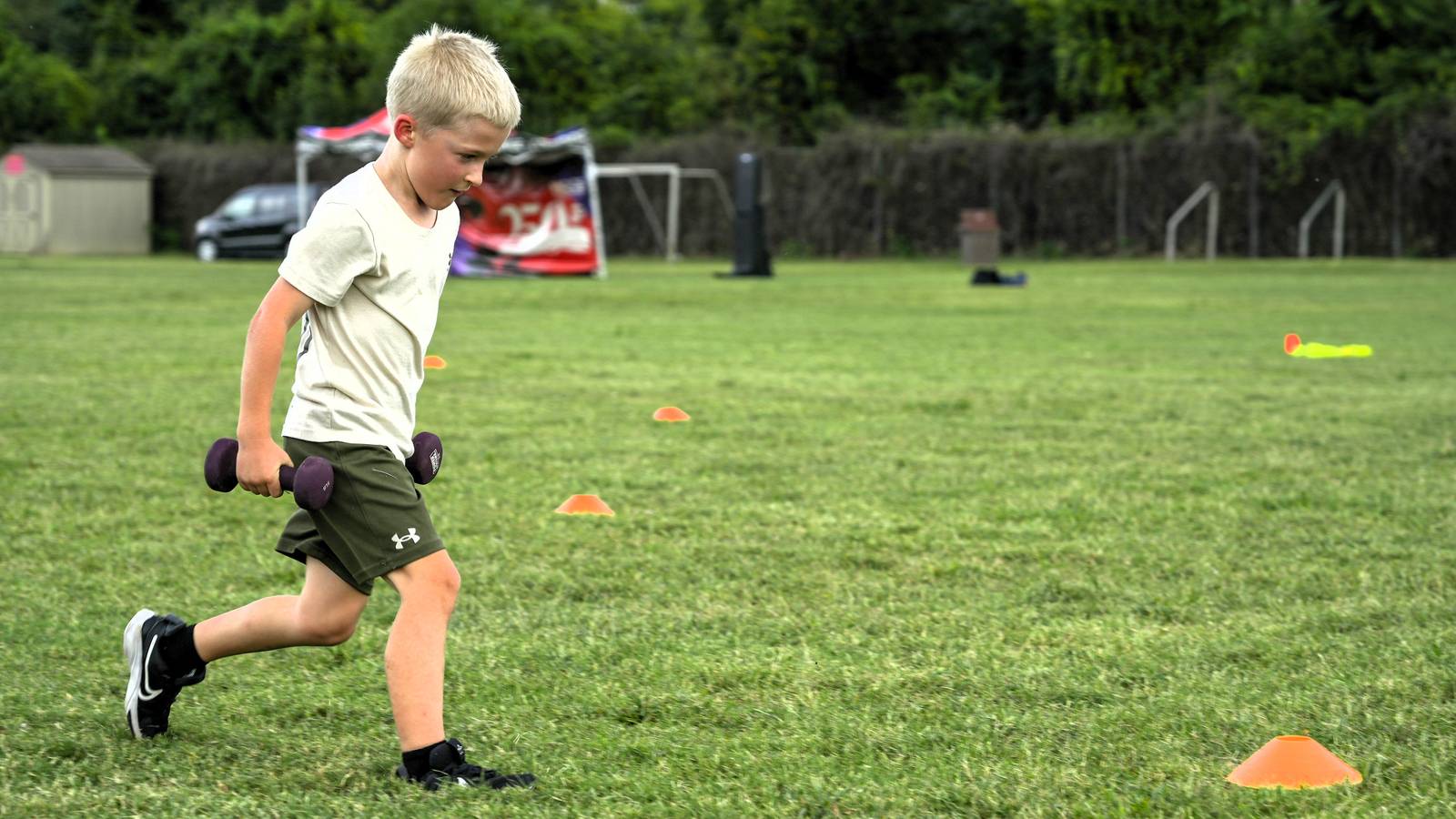
Luckily, we do not have to rely on hearsay anymore to decide whether to let adolescents lift weights. Scientific evidence now exists on the topic of resistance training and whether it harms growth plates and stunts growth. At the same time, science also shows that early childhood fitness training can bring a lifetime of benefits compared to normal play and, especially, doing nothing at all. Here is the question about fitness training with your children:
Stew, I have heard many pros and cons of having kids, starting with weightlifting. When did you start with your kids? Any settling of the controversy around it? Thanks, Max
Max, great question. I wish a single article could dispel this myth, but maybe we can be a little smarter in our answers during these debates. From experience, I would say that if your child is interested in exercise, encourage it. If they do not have an interest, set the example for them, and eventually they will come around. The danger is not that children lift weights but that they do not exercise at all. Just look at childhood overweight/obesity rates to see that there is far greater danger for lack of youth physical fitness training. But don’t take my word for it, here is what the science says about youth resistance training:
The American Academy of Pediatrics (AAP) released a comprehensive clinical report confirming that strength training is not harmful to growth plates when done in supervised settings using appropriate loads. In fact, the organization’s updated Resistance Training for Children and Adolescents guidelines emphasize that resistance training is not only safe for youth but also actively aids in self-esteem, confidence and mental health.
Similarly, the National Strength and Conditioning Association (NSCA) published an updated position statement concluding that appropriately designed and supervised youth resistance training programs are safe, and that they improve cardiovascular risk profiles, strengthen bones, enhance motor skills and protect against sports-related injuries for many years into adulthood.The danger isn’t in the resistance training itself. The real risks come from poor supervision, improper form and progression into heavier weights too quickly.
My Personal Experience: Starting at 12
I started my own resistance training journey when I was 12 years old. I didn’t have a perfectly structured program, just simply three sets of 8 reps for all lifts. But this dedication to learning the basics helped me achieve all my athletic goals throughout my teens. Lifting didn’t stunt my growth. It did just the opposite. Instead, it built a foundation of strength, discipline and work ethic that carried me through my athletic life in high school and college and into military service. It taught me how to set long-term goals and understand that it takes hard work to achieve them. The benefits were far more than physical.
When my own son reached that exact same age, I didn’t hesitate to introduce him to resistance training (on his request). But I applied the lessons I’d learned over decades in the fitness industry. We didn’t start with heavy barbell exercises. We started with calisthenics, dumbbells and kids’ sports such as baseball, basketball and martial arts. These set the foundation for a skinny, 6’3” eighth-grader who weighed 140 pounds to a 6’4” 200-plus-pound athlete who could lift heavy weights, do high-rep calisthenics, and play pickup games throughout high school and college. Now he serves in federal law enforcement.
Here is exactly how we approached it:
Calisthenics First, Eating and Sleeping
We started with bodyweight exercises including pushups, pullups, jumping, squats and lunges. If you cannot control your own body weight, you have no business adding extra weight to lifts. Many teens who want to start training want to gain weight and put on muscle. You must eat and sleep well for this to occur. Add protein-rich foods to every meal. We made fitness, eating and sleeping part of the growth plan.
Form Over Everything
When we introduced weights, it was about mastering the mechanics with extremely light dumbbells. The goal was to build coordination, not to set personal records. We built up over time to heavier weights but stayed under his bodyweight for a few years until 14. Then he was ready to increase the weight on the lifts as he was getting bigger and stronger.
Supervision and Patience
I was there for every rep. As the AAP guidelines point out, a well-supervised environment with qualified instruction is the absolute key to injury prevention. We focused on consistency, not intensity. We even had to pad the squat bar — as his bony upper back and shoulders could not bear the weight — to make him more comfortable with new lifts. That eventually went away as he built mass.
For decades, the warning was that lifting weights would damage a child’s growth plates and stunt their physical development. But what will truly stunt a child’s growth is not eating enough food and missing out on restorative sleep. If your kids are showing an interest in the weight room, encourage it. You do not need to hold them back out of fear of stunting their growth. Focus on structured, supervised sessions that prioritize technique over heavier weights. The fitness habits they build as a child and young adult will pay dividends when they are 30, 40 and beyond. Check out more training ideas in the Military.com Fitness Section for all fitness levels and goals.
Read the full article here
6 Comments
This is very helpful information. Appreciate the detailed analysis.
Good point. Watching closely.
I’ve been following this closely. Good to see the latest updates.
Solid analysis. Will be watching this space.
Great insights on Defense. Thanks for sharing!
Interesting update on Should My Child Lift Weights?. Looking forward to seeing how this develops.