

Listen to the article
When looking to purchase a new-to-you used vehicle, there are more choices than ever before. We aren’t simply referencing the wide range of different models available by the various automakers out in the world, as that has largely been the same over the last century. Instead, we’re talking about the different types of vehicles on the menu, from the good old internal combustion-engined car that runs on either gas or diesel, to a hybrid that uses an ICE mated to an electric motor.
Then we come to a full electric vehicle, which relies solely on a number of electric motors and batteries to ensure the machine and its occupants can reach their destinations. While they allow you to charge them off your own power plan at home, which can save you a ton of money in running costs, EVs have been hammered in recent times due to a lack of charging infrastructure, a general lack of maximum range, and battery degradation that compromises their long-term usability. As it turns out though, the final of these points isn’t as bad as it’s made out to be.
Used EVs Depreciate Very Quickly
To add some context to this story, one of the reasons many drivers consider laying down cash on a used EV is due to how much money they lose when compared to their original MSRP. Thankfully, at least if you’re looking at getting stuck into the EV life, the difference in terms of depreciation to ICE machines has narrowed considerably in recent years, even if there is still a gap you’ll have to make do with. According to Cox Automotive, the average value drop of an ICE vehicle over a three-year cycle stood at between 35% and 40% at the end of 2025, while EVs tended to lose 38% to 42% of their worth over the same period.
This relative extra value loss, alongside concerns of a drop in battery health that far exceeds the drop in efficiency of an ICE over the same amount of time, has only added to the challenge for manufacturers when it comes to selling EVs.
There Are Several Reasons For This

Aside from battery concerns, there are other reasons behind EVs depreciating faster than ICE-equipped cars. These include a more restrictive charging network that can make it harder to find a charging station during trips across the US, as well as rapidly developing technology that quickly undermines a model that was brand-new just a year ago. As a result of these concerns, many new and used buyers are instead turning to hybrids, which provide the best of both worlds from either propulsion method.
The thing is, EVs provide a golden opportunity to get a premium vehicle for considerably less than you’d first expect. Even though their residual values haven’t yet fallen in line with ICE’s, they’re getting closer, as illustrated by Cox’s findings. The charging infrastructure across the US is progressing all the time, while the relative ranges of new EVs are running ICEs ever closer. But there’s an even more important, tantalizing reason why a used EV is a hugely tempting proposition.
EV Batteries Don’t Lose As Much Of Their Capacity As First Feared

A loss of pure battery capacity was one of the main concerns regarding used EVs, for a couple of key reasons. Firstly, the relative lack of range sustained by an EV with a heavily degraded battery severely compromises its everyday versatility, as you’ll need to charge it more often to keep running. Seeing as many fast chargers force you to sit around for 20 to 30 minutes for a charge to a decent level, this ramps up the level of inconvenience. Secondly, the cost of replacing the battery once it reaches the end of its life, once anticipated to only be a handful of years, can be north of $5,000.
The good news is that, with the passage of time and plenty of scientific study, it has been found that the rate of battery degradation isn’t as high as once thought. According to Geotab, the average rate of battery capacity loss of EVs stands at just 2.3% per year, while Generational’s testing has recorded an even lower reduction rate of 1.8% over a 12-month period. For reference, EV batteries are deemed unusable when they reach between 70% and 80% of their original capacity. This is when they’ll be unable to reliably hold a charge, and can run into a range of problems that make using them a real hassle.
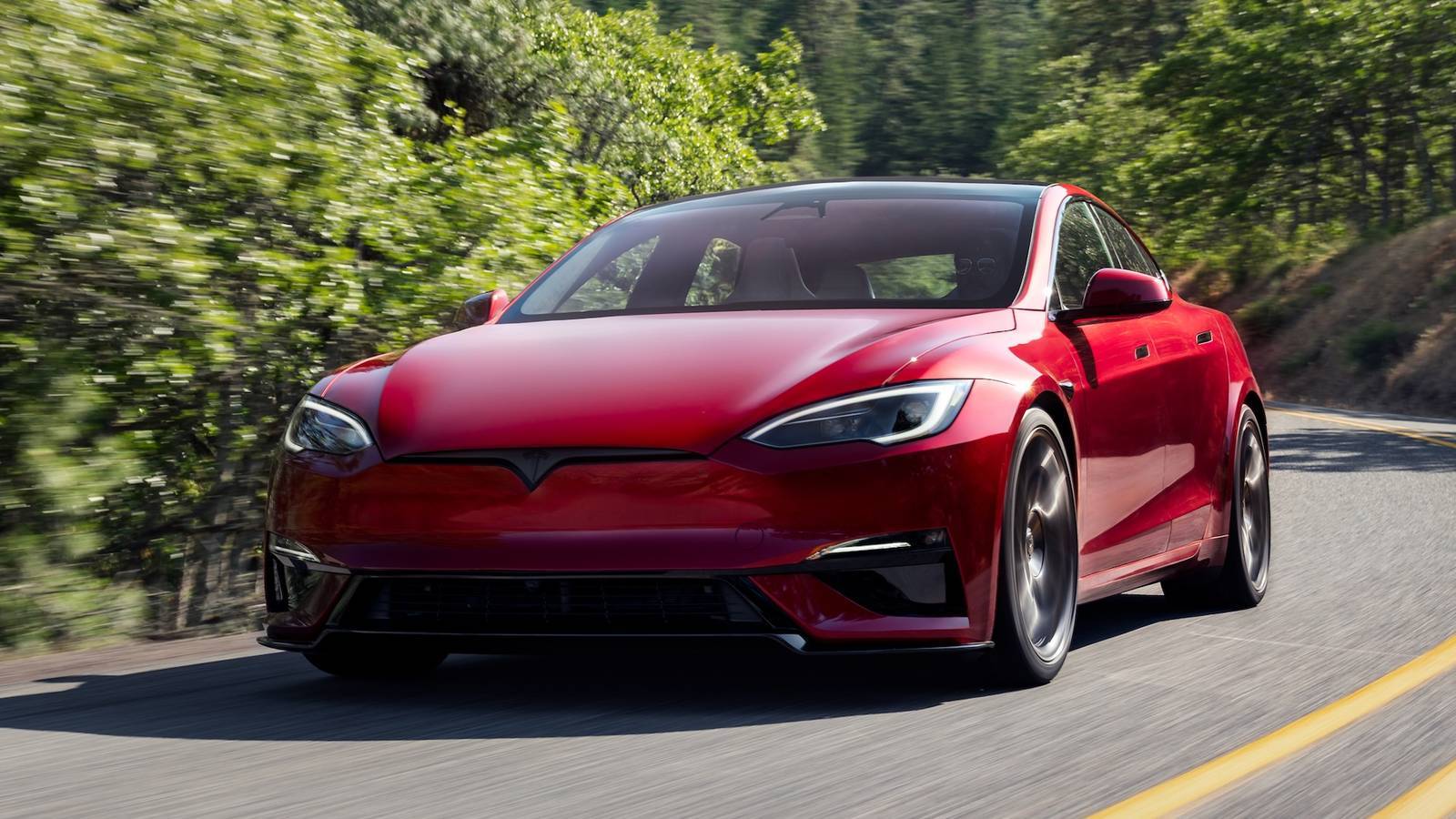
Based on this math, and by working with an average of 2% yearly range reduction based on the findings used in this piece, an EV battery should remain perfectly usable for between ten and 15 years before it needs replacing. Plus, at that rate, you could expect to buy something like a three-year-old Tesla Model S AWD, which boasts a total range of 320 miles when new, and still have around 300 miles of usable range left.
Sources: CarEdge, Cox Automotive, Generational, Geotab, iSeeCars, Tesla.
Read the full article on CarBuzz
This article originally appeared on CarBuzz and is republished here with permission.
Read the full article here
5 Comments
Solid analysis. Will be watching this space.
I’ve been following this closely. Good to see the latest updates.
Interesting update on Used EVs Lose 60% Of Their Value But Only 7% Of Their Range In Three Years. Looking forward to seeing how this develops.
Good point. Watching closely.
Great insights on Defense. Thanks for sharing!